
Aldus Manutius: the printer who put books in everyone’s hands.
Five hundred years before Aldo Reborn, a printer in Venice had a radical idea. A book shouldn’t be a heavy thing chained to a library. It should fit in your hand. His name was Aldus Manutius. This is his story, and how it became ours.
Aldo Reborn is the app that carries his name. It turns your photos into a small printed book on a Mac. It does the print craft, the page order and the colour, so you never have to learn it. See what the app does.
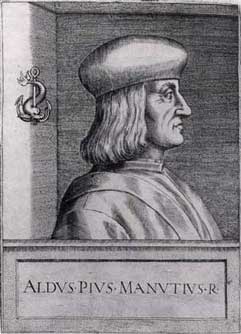
A scholar who became a printer in Renaissance Venice
Aldus Manutius (Aldo Manuzio in Italian) was born around 1449 near Rome. He came to printing late, as a classical scholar. Around 1494 he founded the Aldine Press in Venice, then the printing capital of Europe. His mission: publish the great works of Greek and Latin literature accurately, beautifully, and for as many readers as possible.
That last part was the radical bit. In 1500, a serious book was a luxury. A scholar’s tool, or a collector’s trophy. Aldus wanted them read.
1501: the book that fit in your hand
In 1501, Aldus did something that changed reading forever. He shrank the book. Until then, important texts were large folios. Lectern-sized, costly, made to stay put. Aldus published the classics in octavo: a small, light format you could slip into a bag and read anywhere. He called them libelli portatiles, portable little books.
It is the direct ancestor of every paperback, every pocket edition, and every zine you’ve ever folded into a coat pocket. To fit more words onto those smaller pages, his punchcutter Francesco Griffo cut a new, slanted typeface modelled on humanist handwriting. We still call it italic.
Festina lente: “make haste slowly”
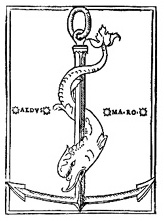
Around 1502, Aldus took a mark for his press: a dolphin coiled around an anchor, under the motto festina lente, “make haste slowly.” Move fast, but with care. It came from a Roman coin, a gift from the poet Pietro Bembo.
His editions were so admired that printers across Europe copied the dolphin and anchor almost immediately. Call it the first great case of a counterfeited logo. The mark, and the motto, outlived him.
The dream outlived him
Aldus Manutius died in Venice in 1515. The idea didn’t. The Aldine Press kept printing for another century. The pocket book became the default. The semicolon and much of modern punctuation trace back to his workshop. Five hundred years later, a book that fits in your hand is simply a book.
That was the whole dream. The thing should be ordinary, owned, everywhere. Not rare. Not gatekept. Not someone else’s to print.

Five centuries later: Aldo
Aldo Reborn picks up that dream again, this time for photographers. The technology changed. You have a printer now, not a press. But the wall is the same. Making a real, bound book still sits behind craft most people never learn. Imposition, CMYK, bleed. The festina-lente parts. Aldo does them for you, so you can hold your photos as a real little book, printed at home.
Meet Aldo. Five hundred years old, lives in your printer, here to help you make your first zine. Aldus, reborn. Since 1501. Updated 2026.

Carry the dream a little further
Aldo Reborn is out on macOS. Print your first zine at home. 7-day free trial. Then €14.99 once, yours for life.